The most commonly used device in conjunction with a protraction Face Mask is an acrylic splint with hooks, to which the orthopedic elastics are engaged.
This splint comprises of a Hyrax device, wire frame work encompassing the upper posteriors and hooks. The hyrax device is adapted to the palatal contour and soldered to the wire frame work on the palatal aspect and the hooks which are individually bent are soldered on the buccal side.
This skeleton of the wire framework with soldered joints is concealed in acrylic. The height of the acrylic is slightly exaggerated to behave as a bite block.
Design and construction of simplified splint with protraction hooks
A preformed TPA (Trans Palatal Arch) is adapted across the palate extending from one side to the contralateral side. The open end of the 'U' Loop of the TPA is kept facing fowards. (Fig 1).
In a mixed dentition patients, this wire can be made to pass through notches, made on the occlusal surfaces of deciduous molars at the junction of their distal and mesial marginal ridges so that the wire and appliance remains firmly retained within the boundries of the strong enamel.(Fig 2 and 3).
The bent TPA is stabilized on the cast with stick wax and separating media is applied on the cast. (Fig 4). Once the separating media dries acrylization is started.
Self cure acrylic is mixed into adough and adapted over the occlusal surfaces of posteriors extending onto the palatal and buccal surfaces of all the posterior teeth just short of the gingival margins. The height of the acrylic blocks is maintained uniform on both sides. The set acrylic appliance is trimmed and polished and now ready to be cemented/bonded to the teeth. (Fig 5 and 6).
Once a thorough bonding is confirmed the orthopedic elastics can be engaged from the protraction hooks intra-orally to the horizontal rods of the Protraction Headgear extra-orally. (Fig 7 and 8).
Advantages of Simplified Splint with Protraction Hooks
- A very simple design.
- The device is relatively hygienic as just a simple wire spans the palatal region instead of a bulky Hyrax device.
- Less wire bending is involved and does not require any special pliers.
- The appliance can be fabricated by the clinicians themselves and do not require the assistance of an expert lab or dental technician.
- No soldered joints are present; therefore solder failures are not a matter concern. (Solder failures are encountered in certain cases at the Hyrax-frame work interface or Hook-frame work interface).
- Very economical as compared to the appliance containing a Hyrax device.
- Slow palatal expansion can be achieved with opening up the central 'U' Loop.
Limitations
This device is not applicable to cases with severe transverse skeletal discrepancy, where a larger span of palatal expansion is indicated. But, this simplified splint can be used in such cases as retainers, post transverse skeletal correction.
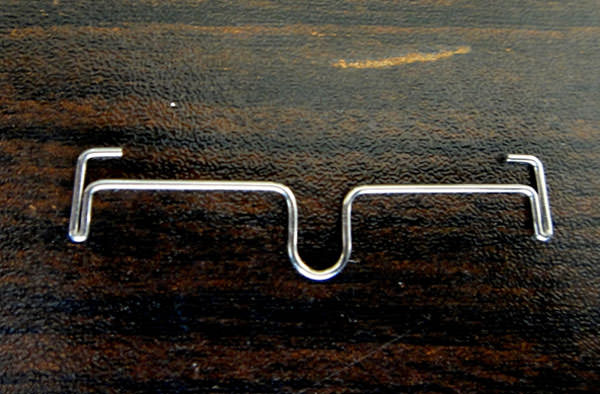
Figure 1
Prefabricated Transpalatal Arch.
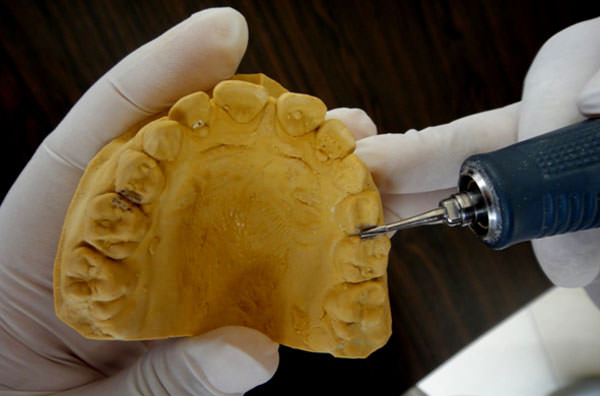
Figure 2
Notches made at the junction of the marginal ridges of deciduous molars.
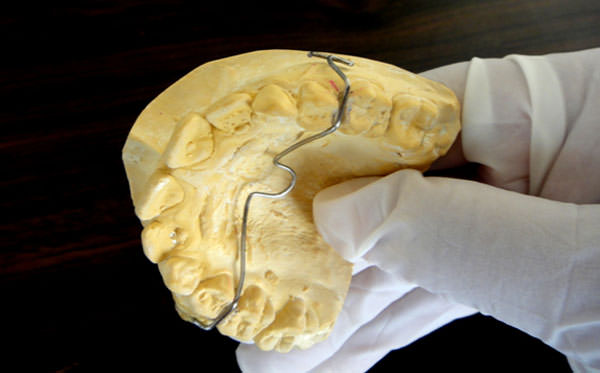
Figure 3
TPA adapted across the palate and passing through the Notches made at the junction of the marginal ridges of deciduous molar
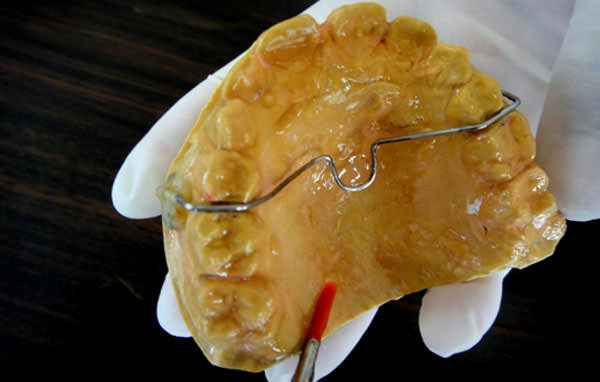
Figure 4
Separating media applied after stabilization of the TPA and before acrylization
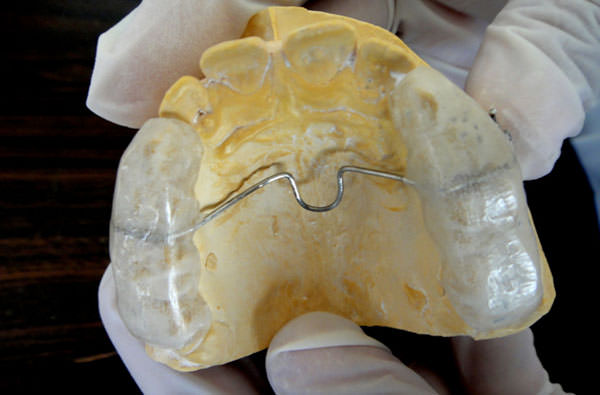
Figure 5
Acrylized appliance with TPA and acrylic bite blocks
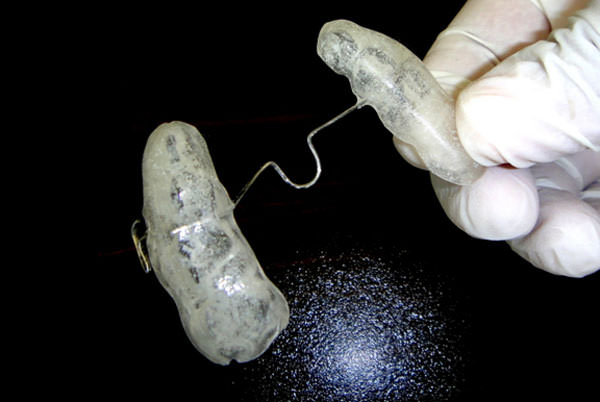
Figure 6
Finished and polished appliance.
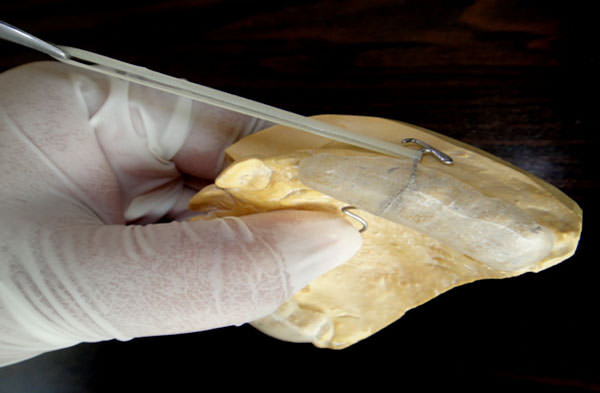
Figure 7
Orthopaedic elastic engaged to protraction hooks.
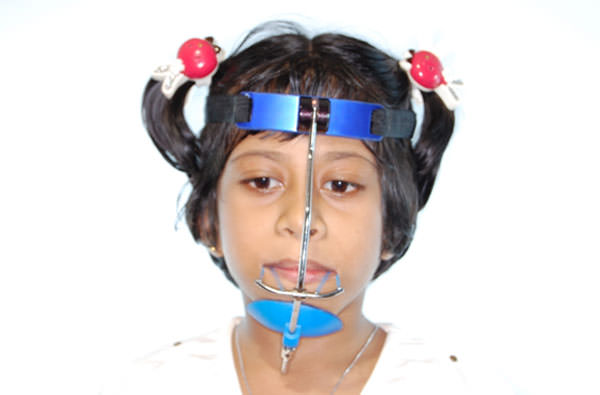
Figure 8
Orthopaedic elastic engaged from protraction hooks to the Face Mask.